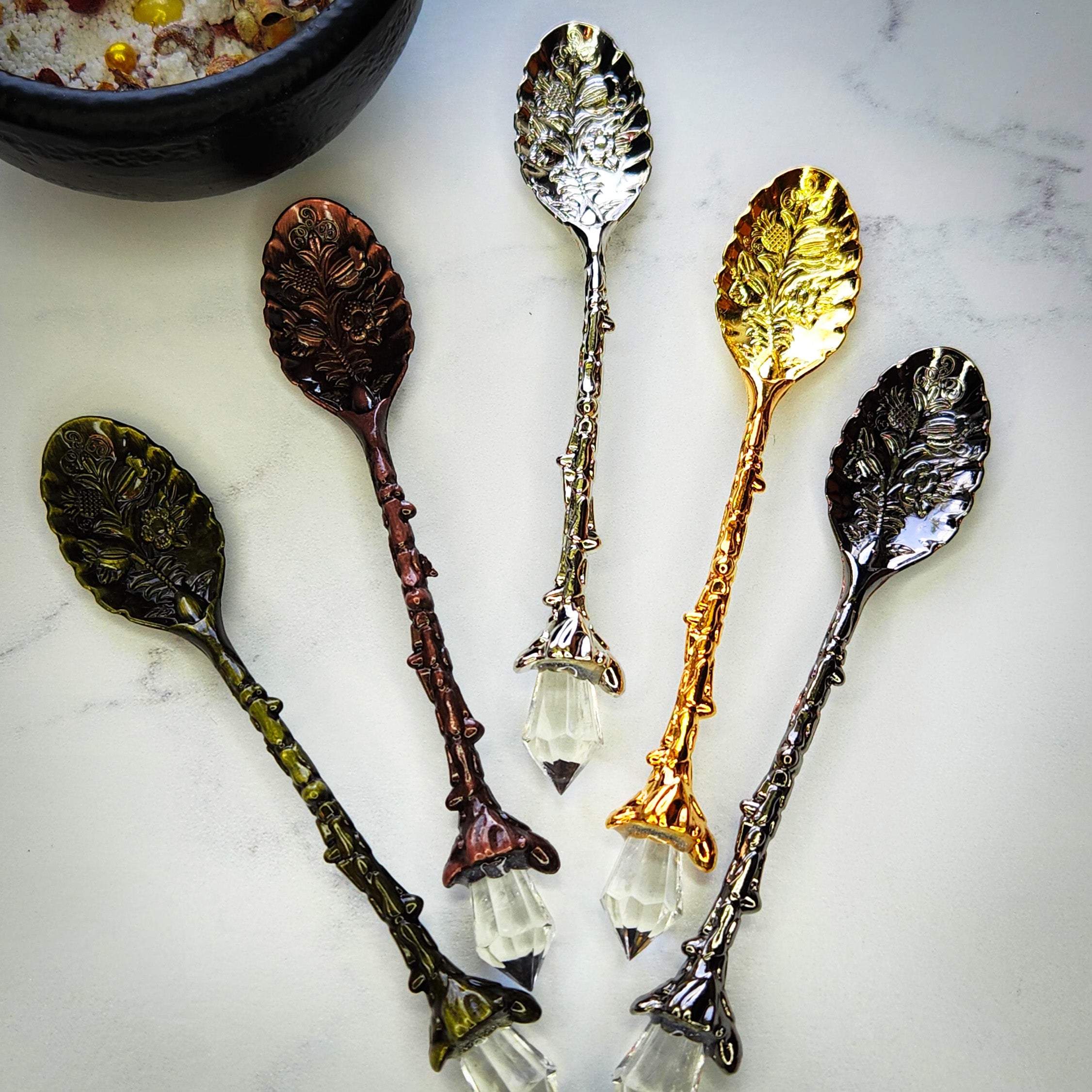
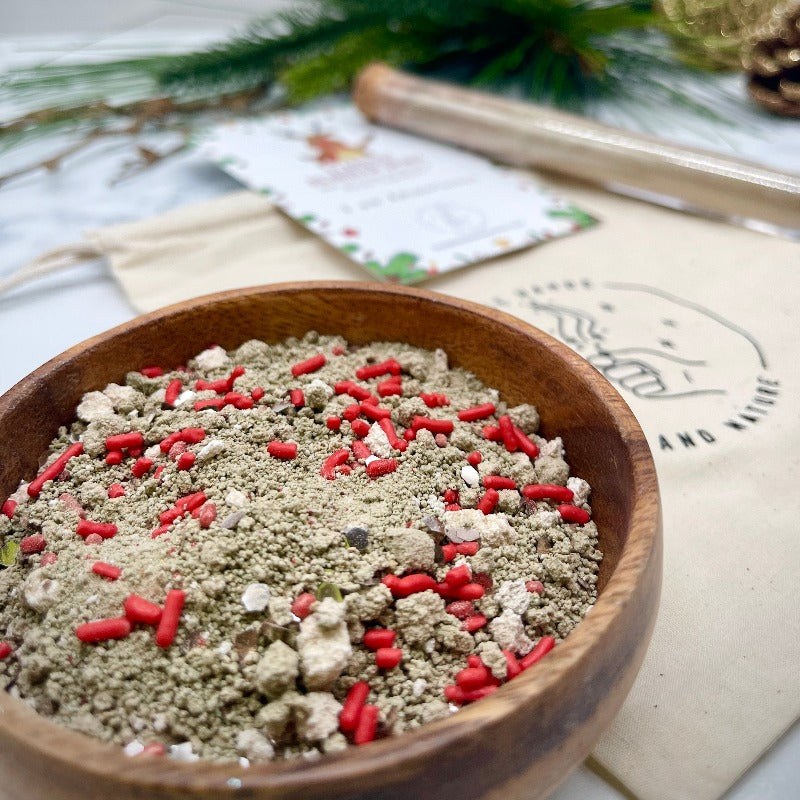
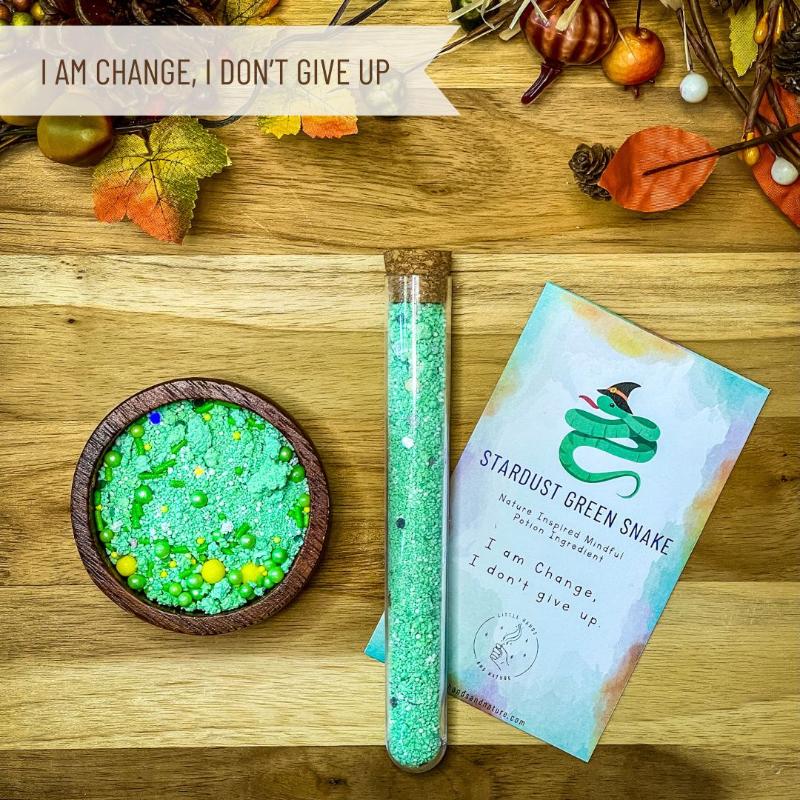

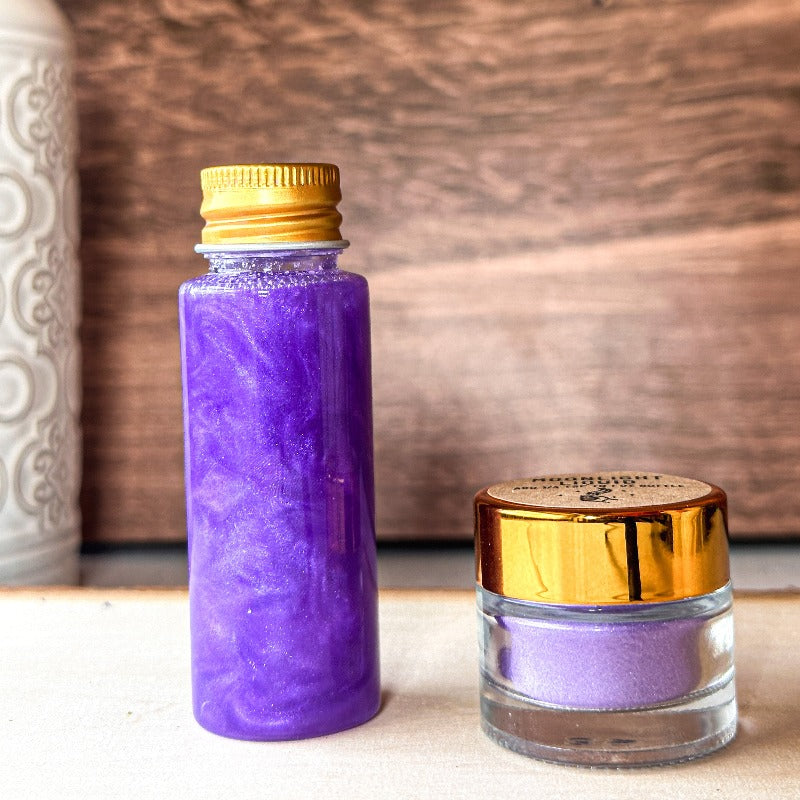

A crystal spoon catches the light. A tiny wooden scoop rests beside a bowl of fizz. Your child chooses a color, pours slowly, and watches the surface change. That is the heart of how to use potion accessories: not getting the steps right, but making a small, ready place where their ideas have somewhere to go.
Potion accessories are the little objects that give Potion Play its texture. They invite a child to pour, stir, scoop, sort, and tell a story with their hands. You do not need a big setup or a plan for what the potion should become. A few beautiful pieces, a protected table, and a little time together are enough.
Start with a small invitation
Set out just two or three accessories alongside your fizzy ingredients and liquid. A wooden spoon, a crystal scoop, and a small vessel can hold plenty of possibility. When there is less on the table, children can see what is there and begin in their own way.
Choose a tray, shallow bin, or cookie sheet to catch the happy overflow. If you are playing at the kitchen table, an old towel underneath is perfectly good too. Potion Play is meant to be hands-on. A little fizz on the tray is part of the picture, not a sign that anyone has done it wrong.
For younger children, you might begin with a larger wooden tool and one easy-to-hold bowl. Older children often enjoy having a few more choices, such as a funnel, tongs, or several tiny treasures to arrange. It depends on the child and the day. Some days call for one bowl and a spoon. Some days call for a whole forest floor of colors and cups.
How to use potion accessories without taking over
Place the pieces down, sit nearby, and let the first move belong to your child. They may scoop ingredients carefully into separate piles. They may put everything in one bowl at once. They may decide the spoon is a bridge, a wand-shaped stirring tool, or a tiny oar for a Mermaid’s Magic sea.
There is no finished picture to match. That is what makes the accessories so useful. They are not there to direct the play. They offer a beginning.
If a child looks toward you for an idea, keep your words light. You could say, “I wonder what will happen if that blue fizz goes in next,” or “That crystal spoon looks very busy today.” You might ask whether the potion needs petals, rain, moonlight, or a secret garden path. Then leave room for their answer.
Try not to rush in with a better way to pour or a cleaner way to stir. The slow tip of a cup, the extra scoop, and the changing plan are often where the play settles in. Your job is not to run the moment. You get to be in it.
Give each accessory a simple role
Children often create their own uses, but a gentle starting point can help when everyone is hovering around a new kit. Wooden scoops are lovely for moving dry fizzy ingredients from one little dish to another. Crystal spoons make stirring feel special and help small hands add just a pinch at a time.
Funnels bring a satisfying kind of focus to pouring. Use one over a larger vessel, with a tray beneath, and let the liquid travel slowly. Tongs are wonderful for moving nature-inspired pieces from one cup to another, especially when a child is building a tiny pond, fairy garden, or treasure collection around their potion.
Small bowls and vessels can become separate “ingredients” before they become one potion. One might hold green fizz for moss. Another can be pink petals. A third might be the rainy-day liquid. Naming is optional, but it can be a sweet way to follow a child into the world they are making.
Not every accessory needs a job. Sometimes a pretty stone sits beside the bowl because it belongs there. Sometimes a wooden tool is lined up with three others and never touches the potion at all. Play can be busy, quiet, story-filled, or simply about arranging beautiful things.
Let the seasons offer an idea
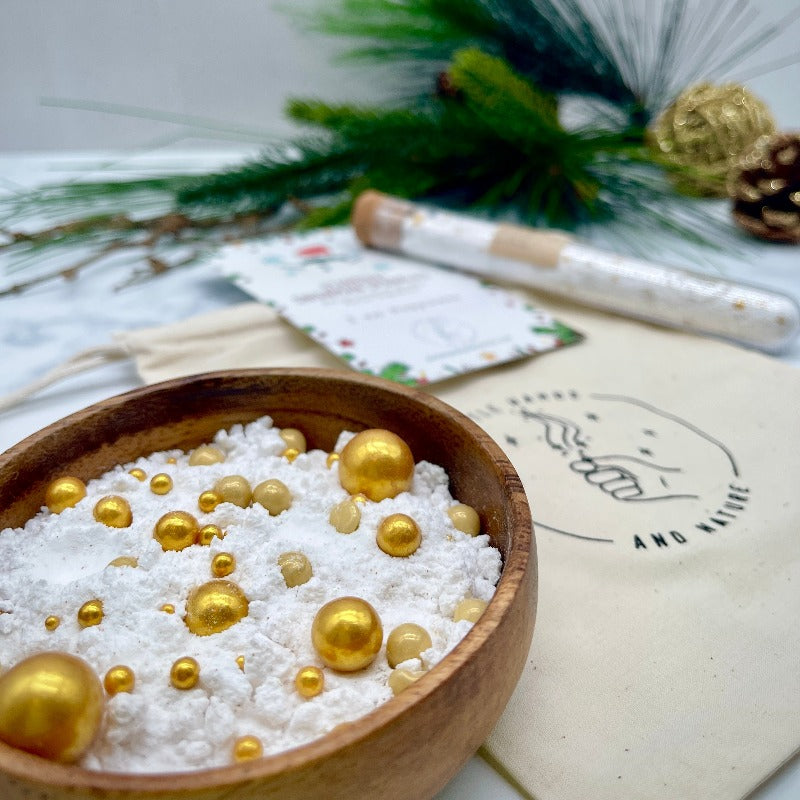
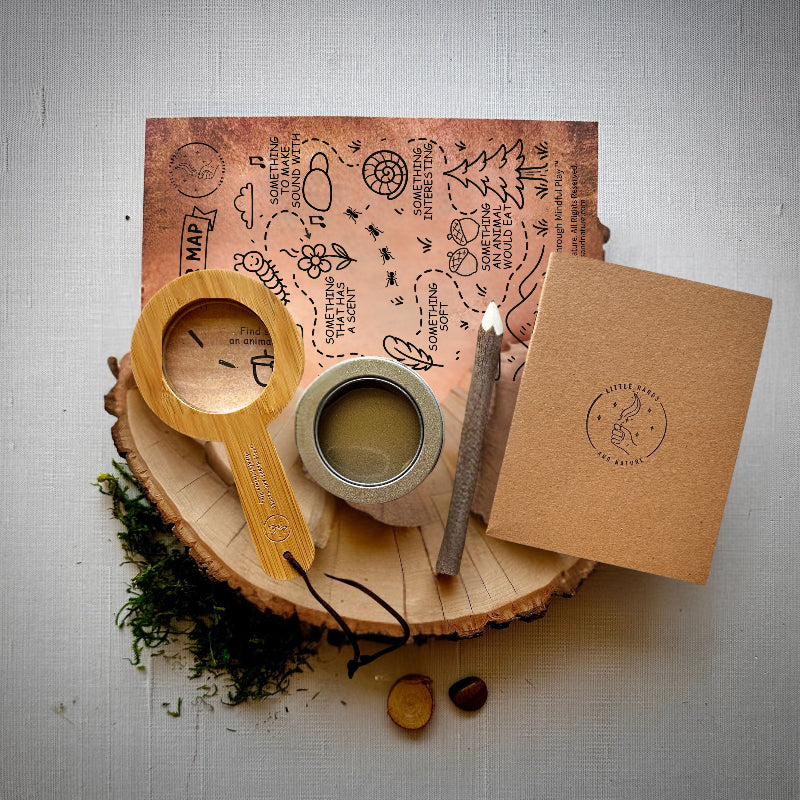
Nature makes an easy companion for potion accessories. In spring, you might set out a few fallen petals or smooth leaves from the yard beside a Fairy Crystal-colored mix. In summer, a bowl of cool water, a scoop, and bright ingredients can become a backyard splash of color. Autumn brings seed pods, dry leaves, and warm woodland shades. In winter, a silver spoon and pale fizz can become frost, snow, or a moonlit pond.
Use only what feels easy to gather, and keep the setup simple. There is no need to turn a walk into a project. A single leaf tucked beside the tray is enough to change the feeling of the table.
If you bring found nature items indoors, give them a quick look first. Choose clean, sturdy pieces that are suitable for your child’s age, and keep all Potion Play materials for play only. Non-toxic ingredients are made with care, but potion ingredients and small accessories are not for eating or drinking. An adult staying close keeps the moment easy and comfortable.
Make room for playing together
Potion accessories work best when they are an invitation, not another thing to set up and walk away from. Pull up a chair or sit on the floor beside the tray. Make your own small potion in a second bowl. Let your child notice that you chose yellow first, or that your wooden spoon made a little swirl.
You do not have to narrate every move. A quiet few minutes of stirring side by side can be enough. If conversation comes, it may be about the potion. Or the dog. Or something that happened at school. Let it wander.
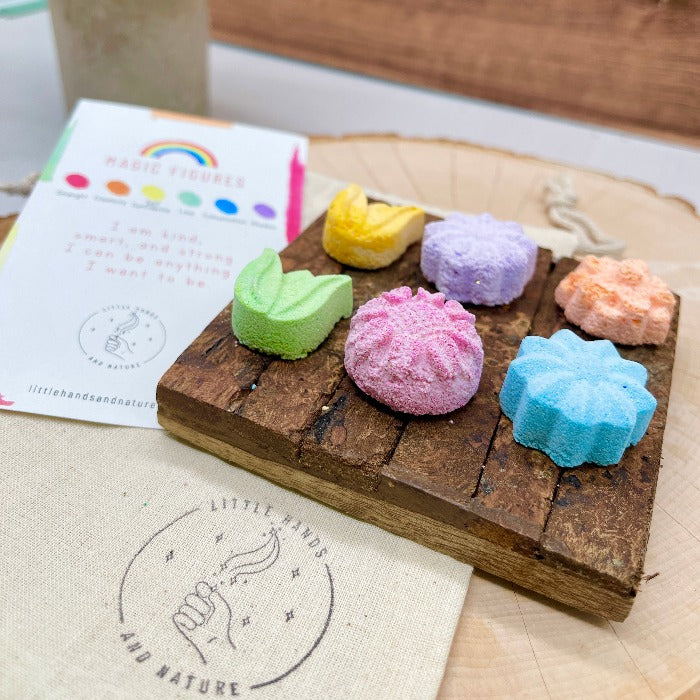
This is one reason ready-to-play kits can be such a relief. The supplies are already gathered, the colors and tools are already chosen, and you do not have to search through drawers at the end of a long day. Little Hands and Nature makes its potion kits, refills, and accessories by hand in the United States, with non-toxic ingredients and the small details already considered.
Keep the cleanup soft and simple
When the potion has reached its natural ending, invite your child to help carry cups to the sink or wipe the tray with a damp cloth. There is no need to make cleanup a big finish. It can be part of the rhythm: pour, fizz, stir, rinse, rest.
Wash reusable wooden tools gently by hand and dry them well rather than leaving them soaking. Wipe crystal spoons and other accessories clean according to their material, then let everything air-dry before putting it away. Keeping a small basket or pouch for tools makes the next play moment feel ready before it begins.
Consumable fizz and liquid will eventually run out, which is part of the joy of Potion Play. A refill can bring back a favorite color without needing a whole new collection of tools. And familiar accessories often become more meaningful with use - the spoon that always stirs cloud potions, the little cup that holds forest green, the scoop your child insists is for stardust.
On an ordinary afternoon, choose one small accessory and place it on the table. Sit down beside your child. See what they make of it.
With love and gratitude,
Little Hands and Nature