


The night before school can feel strangely loud.
The backpack is packed. Clothes are waiting. Lunch is planned.
But inside your child, there may still be waves.
What if I don't know anyone?
What if I miss you?
What if I don't know what to do?
Sometimes those worries arrive as questions. Sometimes they look like a tummy ache, extra cuddles, trouble settling at bedtime, or a child suddenly insisting that they don't want to go.
And sometimes there are no words at all.
For a young child, starting school—or returning after a long summer—can mean stepping into a world filled with unfamiliar people, routines and expectations.
They don't necessarily need us to make every uncomfortable feeling disappear.
They need somewhere safe for those feelings to land.
At Little Hands & Nature, we believe some of the most meaningful conversations happen when nobody is trying too hard to have one.
Hands are busy.
Water is moving.
Something is being poured or stirred.
And you are simply there.
That is where our ocean-inspired back-to-school ritual begins.
Not with "Don't worry."
But with:
"I'm here. Let's find our calm together."
How Can You Help a Child Feel Calm Before School?
Quick answer: To help a child feel calmer before school, begin by listening to what feels uncertain. Make the school day more predictable, keep home routines familiar, practise a simple goodbye, and give your child gentle opportunities to express feelings through conversation, imaginative play or sensory play.
Calm doesn't mean never feeling nervous.
It means gradually discovering that a big feeling can come like a wave—and that it can change again.
An ocean-inspired sensory ritual can give children something tangible to do while they explore that idea: pour, scoop, stir, watch, breathe and imagine.
It isn't a treatment for anxiety.
It's a moment of connection.
And sometimes that is exactly where a child needs to begin.
Why Back-to-School Worries Can Feel So Big
Adults know what the first day of school means practically.
Wake up. Get dressed. Eat breakfast. Find the shoes. Get everyone out the door.
Children experience something different.
They may be thinking about the classroom they haven't seen yet. The teacher whose voice they don't know. Where they'll sit. Who they'll play with. Whether they'll be able to open their lunch box.
Most of all, some children are thinking about separation.
Will you really come back?
A child can be excited about school and worried about it at exactly the same time.
Those feelings don't cancel each other out.
School readiness isn't only about knowing numbers, colors, letters or how to hold a pencil. Emotional readiness also involves gradually becoming more comfortable with new routines, communicating needs, separating from caregivers, asking trusted adults for help and managing unfamiliar experiences.
That develops over time.
Not overnight.
So when your child tells you they are nervous, resist the urge to immediately replace their feeling with a happier one.
Instead of "There's nothing to worry about," try:
"Something about school feels big right now. What are you thinking about?"
You may get an answer.
You may get a shrug.
Both are okay.
You have already communicated something important:
You don't have to hide difficult feelings from me.
Think of Feelings Like Waves
There is something beautiful about the ocean as a metaphor for childhood emotions.
The sea is never exactly the same.
Sometimes it is quiet.
Sometimes playful.
Sometimes the waves arrive one after another.
A wave rises. It reaches its highest point. Then it moves.
Feelings can be like that too.
A child who feels nervous at breakfast won't necessarily feel exactly the same way at lunchtime. A difficult goodbye doesn't tell us how the entire school day will unfold.
This is a gentle way to begin talking about emotional regulation with young children.
Emotional regulation isn't expecting a child to stay calm all the time. It develops as children begin noticing what they feel and discovering supportive ways to respond—asking for help, taking a slow breath, holding something familiar, finding a trusted adult or using words for what is happening.
You might say:
"Your worry feels like a big wave right now."
Then:
"What do you think happens to a wave after it gets really big?"
Let your child answer.
The metaphor doesn't need a lesson attached to it.
Sometimes an image is enough.
Why Sensory Play Can Make Space for Big Feelings
Children don't always talk best when we sit opposite them and ask questions.
They often communicate while doing something else.
Drawing. Digging. Building. Pouring. Stirring. Pretending.
Your hands are busy, so suddenly the conversation doesn't feel like the main event.
That is one reason sensory play can fit naturally into the days before school.
Potion play brings together pouring, scooping, mixing, color, texture and imaginative storytelling.
A blue swirl can become a calm ocean.
A shell can represent home.
A stone can become courage.
A fizzing ingredient can be the worry bubbling up—and slowly disappearing.
The child decides what everything means.
That's important.
We're not turning play into therapy or asking a potion to "fix" anxiety.
We're giving imagination room to breathe.
Before You Make the Potion, Go Find the Ocean
You don't need to live beside the sea.
The ocean can begin with a walk.
Go outside together and look for little pieces of nature that remind your child of water.
A smooth pebble. A curved leaf. A tiny stick shaped like driftwood.
Perhaps you already have responsibly collected shells from a family trip.
Ask simple questions.
"Which one feels peaceful?"
"Which one looks strong?"
"If this stone had travelled across an ocean, where do you think it went?"
Follow the story instead of directing it.
The walk itself is part of the ritual.
There is nowhere to perform.
Nothing to finish.
You're simply noticing the world together.
How to Make an Ocean Calm Potion Before School

Make the potion a few days before school, the evening before, or whenever you notice that first-day worries are beginning to surface.
You don't need perfect ingredients.
You need time.
What You'll Need
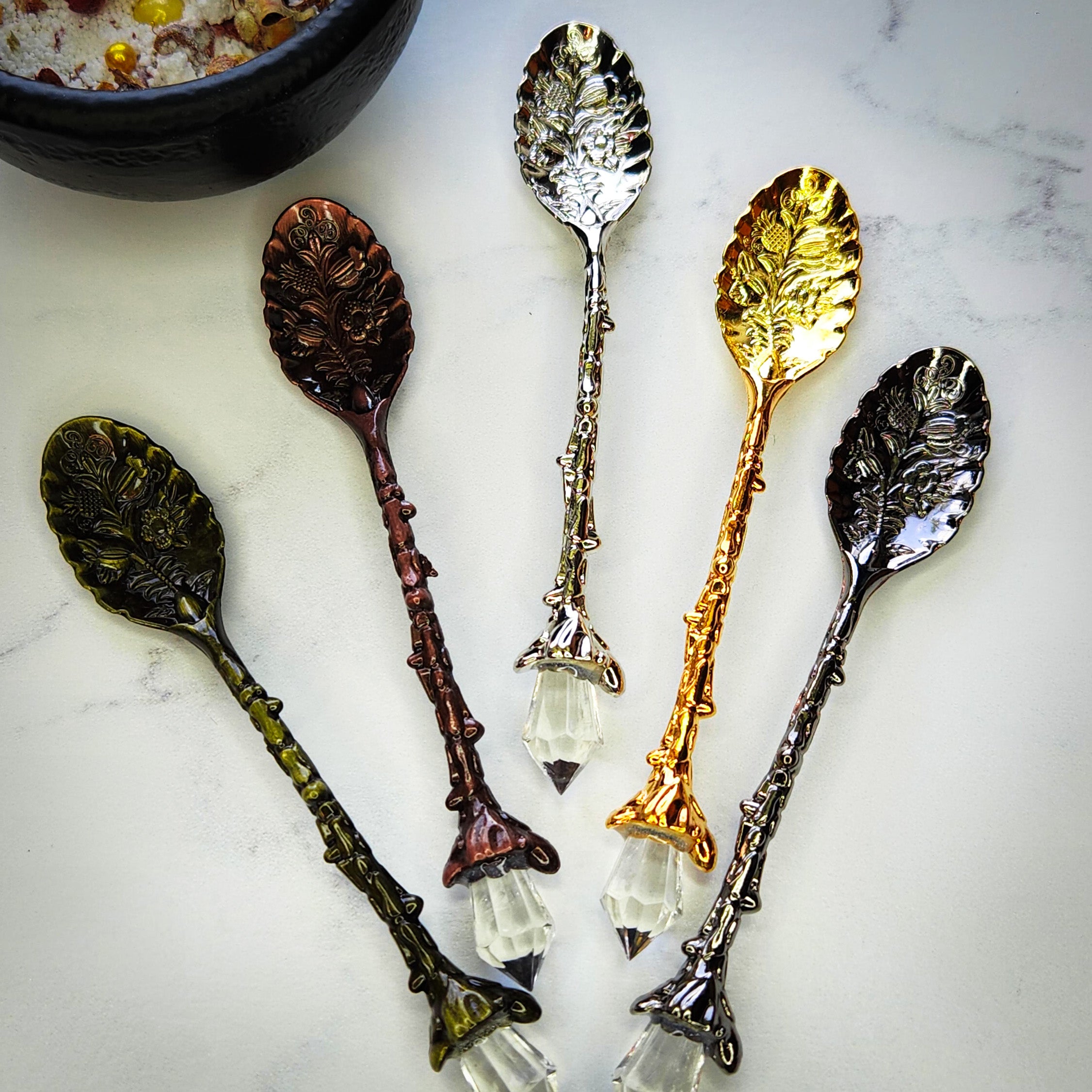
Use a child-appropriate bowl or potion vessel, water, a wooden spoon or scoop, and a few safe sensory or nature-inspired materials.
If you are using collected natural objects, choose materials you know are safe to handle and supervise according to your child's age.
For families who want a ready-made ocean-inspired experience, the Secrets of the Ocean Potion Party Kit can become the sensory materials for this ritual rather than the focus of it.
Then begin.
Step 1: Fill Your Ocean
Pour water into the bowl together.
Don't rush to add anything.
Watch it first.
Move the bowl gently.
Ask:
"What kind of ocean is this today?"
Maybe it's calm.
Maybe stormy.
Maybe your child says it's full of sharks.
That's fine too.
This is their ocean.
Step 2: Give the Worry Somewhere to Go
Choose one ingredient to represent something that feels difficult about school.
You can go first.
"I'm going to add this for saying goodbye in the morning. Sometimes goodbyes can feel hard."
Then give your child space.
They might add something for making friends. For riding the bus. For finding the bathroom. For missing you.
Or they might add something without explaining it.
Let that be enough.
Step 3: Add Something That Feels Like Home
Now choose a shell, pebble or other safe object to represent connection.
Ask:
"What could remind you that you're loved, even when we're not in the same place?"
Perhaps the shell is Mom.
The stone is Dad.
A tiny leaf is Grandma.
There are no rules.
Place it gently into the ocean.
Step 4: Stir Slowly
Now stir.
Slowly.
Watch the water move around the bowl.
If it feels natural, breathe together as you stir.
No complicated breathing technique is necessary.
Just slower than before.
In.
Out.
Round and round.
"The water can move and still become quiet again."
Step 5: Add a Calm-Heart Affirmation
Choose words your child can actually believe.
Not: "I will never be scared."
Try:
"I can take my time."
"I can ask for help."
"I am loved."
"Big feelings can pass."
"I can find my calm again."
Let your child choose one.
They don't have to repeat it ten times.
Once can be enough.
Step 6: Name Your Ocean
Give the potion a name together.
The Quiet Sea.
My First-Day Ocean.
The Calm Mermaid Potion.
The Brave Blue Sea.
The No-More-Rushing Ocean.
Your child's name will probably be better than anything an adult could invent.
When you're finished, don't worry about preserving the potion.
The important part isn't what's left in the bowl.
It's what happened beside it.
What the Ocean Ritual Is Really Teaching
Not that worry is bad.
Not that calm is good.
And certainly not that children should be cheerful before school because adults want them to be.
The deeper message is:
Feelings move.
A child can begin the morning nervous and find joy on the playground.
They can miss you and still like their teacher.
They can cry at drop-off and laugh twenty minutes later.
They can be worried and curious.
Scared and capable.
Quiet and brave.
More than one thing can be true.
Create a Calm Morning Before You Need One
The best back-to-school calming routine begins before the first morning.
Because 7:32 a.m., when one shoe is missing and nobody remembers where the water bottle went, is not an ideal moment to invent family serenity.
Prepare what you reasonably can the night before.
Then protect a little space in the morning.
Not a perfect Instagram morning.
A human one.
Maybe your child touches the shell from the ocean ritual before leaving.
Maybe you repeat:
"Like a wave. It comes, and it goes."
Maybe you simply hug.
Predictability can make transitions feel less mysterious.
Your ritual doesn't need to become another task on the checklist.
It should make the morning softer, not busier.
Practise a Goodbye Your Child Can Trust
A calm goodbye doesn't necessarily mean a tear-free goodbye.
Those are different things.
Choose something simple and repeatable.
A hug. A kiss. A phrase.
"I love you. You're safe. I'll come back after school."
If your child becomes upset, you don't need to convince them that they aren't.
"You really wish I could stay."
Then keep the promise of the routine.
Children gradually learn what goodbye means partly because goodbye keeps being followed by reunion.
After School, Come Back to the Ocean
The ritual doesn't have to end on the first morning.
At the end of the day, you might ask:
"What kind of ocean was school today?"
That question can sometimes open more doors than:
"How was school?"
Maybe there was a storm at lunch.
A peaceful moment during story time.
A giant wave when you left.
A sparkling sea when someone asked them to play.
You're giving your child metaphorical language for an experience that may still be too complicated to explain directly.
And if they don't want to answer?
Sit beside them anyway.
Connection doesn't require a debrief.
What If My Child Is Still Very Worried About School?
Some nervousness around starting or returning to school is understandable.
But not every experience should be treated as ordinary first-day jitters.
Pay attention to intensity, duration and how much the worry is interfering with everyday life.
If distress is persistent or significant, or your child's worries are interfering with sleep, eating, school attendance or normal activities, speak with an appropriate professional such as your child's pediatrician, school counselor or another qualified health professional.
Sensory play can provide a lovely setting for connection.
A family ritual can make a transition feel warmer.
Neither should be presented as treatment for an anxiety disorder.
Sometimes the most caring next step is asking for more support.
Frequently Asked Questions About Back-to-School Worries
How can I help my child feel calm before school?
Listen first. Find out what specifically feels uncertain, make the morning and goodbye routine predictable, and give your child simple coping options such as asking a trusted adult for help, taking a slow breath or carrying an approved reminder of home. Sensory or imaginative play can also create a low-pressure opportunity to talk about feelings.
What should I say when my child is anxious about the first day of school?
Try acknowledging the feeling rather than immediately dismissing it. You might say, "Starting something new can feel big," or "You can feel nervous and still take the next step." Specific reassurance—such as explaining when you will return—is usually more meaningful than promising that nothing difficult will happen.
What are some calming activities for kids before school?
A quiet nature walk, reading together, drawing, gentle sensory play, preparing a familiar breakfast or making a simple ocean-inspired potion can all create slower moments before a transition. The activity matters less than whether it helps the child feel connected and supported.
Can sensory play help with emotional regulation?
Sensory play can create opportunities for children to slow their pace, focus attention on a hands-on experience and express ideas through imaginative play. It can complement everyday emotional-regulation strategies, but it should not be described as a treatment for anxiety or other mental-health conditions.
Why use an ocean theme for a calming activity?
The ocean gives children an easy metaphor for changing emotions. Waves rise, become strong and eventually move on. Parents can use this imagery to talk gently about how feelings also change without telling a child that uncomfortable emotions are wrong.
What are good back-to-school affirmations for kids?
Keep them short, believable and useful: "I can ask for help," "I can take my time," "I am loved," "I can try," and "I can find my calm again." Children are more likely to connect with an affirmation they help choose.
What if my child cries at school drop-off?
A tearful goodbye doesn't automatically mean the child isn't ready for school. Keep your goodbye warm and predictable, follow the school's transition guidance and reconnect afterward. If separation distress is severe, persistent or interfering significantly with attendance or everyday functioning, discuss it with the school and an appropriate health professional.
Let the School Year Begin Like the Sea
There will be calm days.
There will be stormy ones.
There will be mornings when everyone gets out the door beautifully and mornings when breakfast lands on someone's shirt.
Your child doesn't need a perfectly peaceful school year.
They need to know that when a wave comes, they aren't alone in it.
Perhaps that's what your little ocean potion can become.
Not something that promises to take worry away.
A memory.
Water moving beneath a wooden spoon.
A shell dropped gently into the bowl.
Your hand beside theirs.
And the quiet understanding:
This feeling can move.
I can ask for help.
I can find my way back to calm.
Bring a Little Nature-Inspired Magic Into the School Year

If ocean-inspired potion play feels right for your child, explore the Secrets of the Ocean Potion Party Kit as a ready-made invitation to pour, stir, imagine and connect.
You can also explore our Potion Play Kits for more nature-inspired sensory experiences designed around wonder and hands-on play.
And for a little potion magic delivered throughout the year, discover the Fizzy Stardust Subscription.
Because sometimes helping a child prepare for school isn't about adding another lesson.
It's about making room.
For feelings.
For wonder.
For you.
And for one small moment together before the next big adventure begins.