
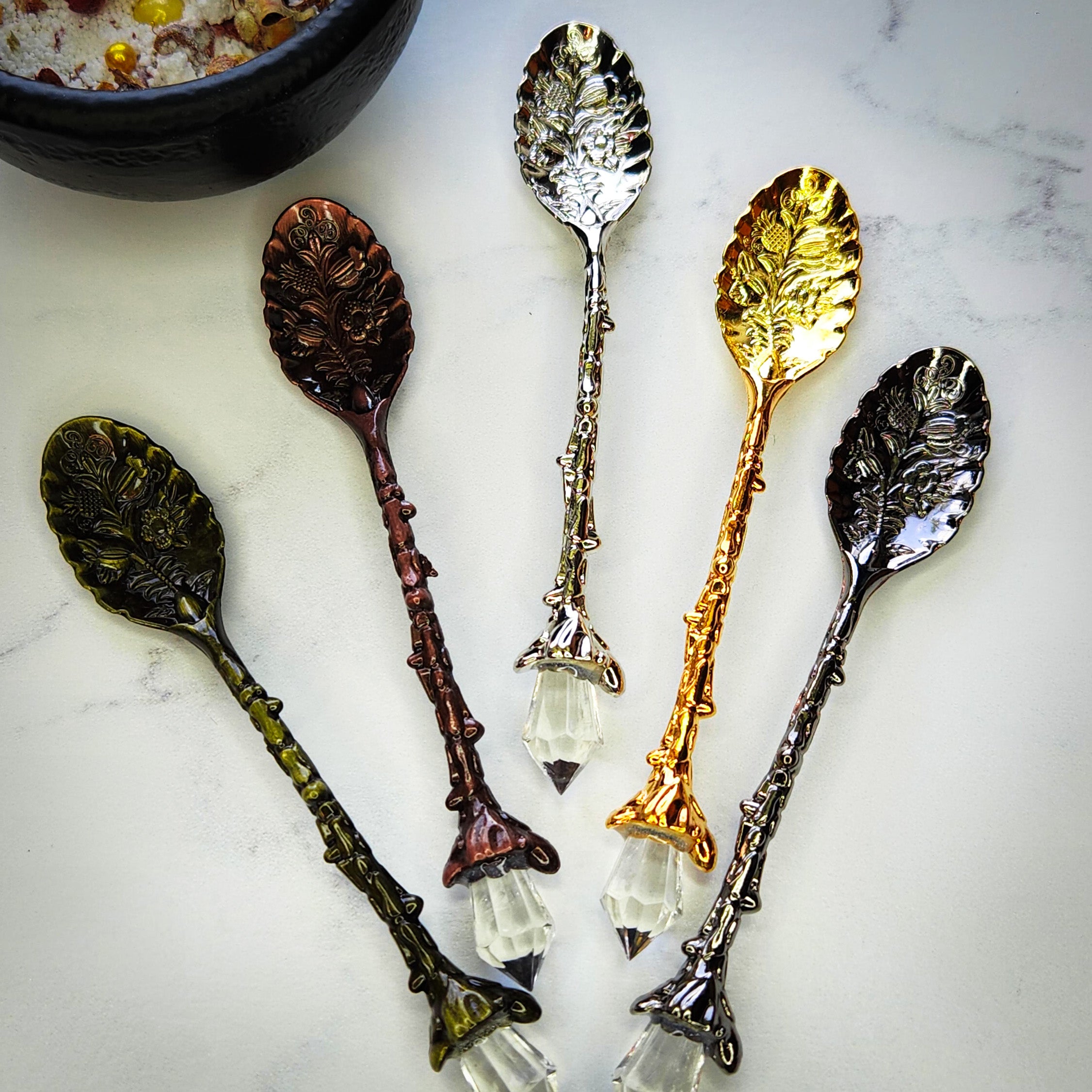


There is a particular kind of quiet that arrives when a child is given a small wooden spoon, a bowl of colorful fizz, and room to wonder. Wooden play tools do not ask for a right answer. They simply give little hands something real to hold while a potion becomes a pond, a fairy garden, a birthday soup, or something with no name at all.
For the grown-up nearby, that can be enough of a beginning. No supplies spread across the counter. No picture to copy. Just a few minutes on the floor or at the table, making something side by side.
Why wooden play tools feel different
Children notice materials with their whole hands. Wood has weight. It has grain and warmth. A scoop makes a soft sound against a bowl. A spoon leaves a small trail through fizzy ingredients. These details are ordinary, but they help make play feel present.
Plastic tools can certainly have a place in a busy home. They are often easy to rinse and tuck away. But wooden tools bring a slower feeling to an open-ended play invitation. They look at home beside petals, stones, pinecones, and the little treasures that seem to appear in pockets after an afternoon outside.
They also tend to stay useful beyond one theme. A wooden scoop that helps make Mermaid's Magic today may be used for moon dust tomorrow, then carried to the mud kitchen or added to a pretend bakery next week. The story changes. The tool stays.
That matters when you are choosing something to keep, rather than one more item that belongs to a single afternoon.
The simple tools children reach for
The best wooden play tools are usually the least complicated ones. A small spoon gives a child a way to stir, tap, and make careful little piles. A scoop is lovely for moving fizzy ingredients from one container to another. A tiny bowl or dish becomes a place for collecting, mixing, and presenting a finished potion.
Then there are the special pieces. A crystal spoon might feel like a treasure found at the bottom of a garden pond. A wooden wand-shaped stirrer can become part of the story without needing to tell the child what that story should be. A smooth peg spoon is easy to grasp and beautiful enough to leave out in a play basket.
A good starting set does not need to be large. In fact, a spoon, scoop, and small bowl often leave more room for imagination than a table crowded with pieces. If siblings are joining in, having a few shared tools can help everyone make their own little corner of the same world.
Choosing wooden play tools for your home
Start with the kind of play you already enjoy together. If your child loves pouring and transferring, choose a scoop and a bowl. If they linger over stirring and watching colors move, a few different spoons may be the best fit. If you are giving a gift, a small wooden tool paired with a mini play pouch can feel thoughtful without becoming another big box to store.
For children ages 3 to 10, size matters more than complexity. Look for tools that feel comfortable in small hands and are simple enough to use without a lot of explanation. Smooth finishes and rounded edges make a difference, especially when tools will be picked up again and again.
It is also worth considering what the tools are made for. A wooden spoon used in dry ingredients or gentle potion play will have different needs than one meant to sit in a sink of water for hours. Natural wood is enduring, but it appreciates a little care.
At Little Hands and Nature, wooden tools are made to sit naturally beside non-toxic potion ingredients, tiny treasures, and the stories children build as they play. Each piece is chosen for the kind of moment where you can open a box, settle in, and begin without a plan.
A small setup can hold a whole afternoon
You do not need a styled table or a craft cabinet full of supplies. A tray, a towel, or a clear spot on the kitchen table is enough. Place out a bowl, a wooden spoon or scoop, and the ingredients from a potion kit or play pouch. Then sit down nearby.
You might begin with something as simple as, “What are we making?” Or you might say nothing at all and see what your child does with the first scoop. Some children narrate every step. Others become very quiet while they stir. Both are welcome.
If you want to bring nature into the moment, add a few dry leaves, petals, smooth stones, or pine needles collected on a walk. Keep the invitation simple and use items that suit your space and your child's age. The point is not to make it look like a picture. The point is to have something lovely to do with your hands together.
Wooden tools are especially nice for this kind of play because they do not compete for attention. They hold the ingredients, the motion, and the story. The child does the rest.
Caring for tools made from wood
A little care helps wooden play tools remain part of your play shelf for a long time. After dry potion play, gently brush off any leftover ingredients with a dry cloth. If a tool needs washing, use a quick rinse with mild soap and water, then dry it right away.
Try not to leave wooden pieces soaking in a bowl or resting in standing water. Wood can swell, roughen, or change shape when it stays wet for too long. A quick wash is usually plenty.
If a spoon or scoop begins to feel dry after many play sessions, a small amount of food-safe mineral oil can help refresh the surface. Apply a little with a soft cloth, let it settle, and wipe away any excess before the tool returns to play. Always follow the care guidance that comes with your particular item, since finishes and materials can vary.
There is something comforting about this small ritual. You rinse the spoon, set it out to dry, and return it to the basket for another day. It becomes part of the rhythm of home, like putting books back on the shelf or gathering shoes by the door.
More than an accessory to the kit
It can be tempting to think of play tools as the extra piece, the small add-on after the main gift. But a wooden spoon can be the thing a child remembers most. It is the object they choose first. The one they use to make the potion bubble. The one they offer to you because there is room at the table for your own little bowl.
For birthdays, holidays, and just-because gifts, wooden tools also carry a quiet kind of usefulness. They are easy to pair with a mini pouch, a handful of fizzy ingredients, or a full potion play kit. They work for one child at home and for a table full of children gathering around a shared tray.
The trade-off is simple: wood asks for gentler care than a dishwasher-safe plastic tool. In return, it offers texture, warmth, and the feeling of something made to be held onto. For many families, that is a fair exchange.
Let the tools wait in plain sight
A basket on a low shelf can be its own invitation. Keep a few wooden spoons, scoops, and bowls there with a pouch of potion ingredients or a jar of nature treasures. You do not have to create a new activity every time. The familiar tools can be the beginning.
Some days, there may only be ten minutes before dinner. Some days, the bowl stays on the table through a long, winding afternoon. Both count. The beauty of open-ended play is that it can meet the day you actually have.
Leave a spoon within reach. When a little hand picks it up and asks you to sit nearby, you may find that the moment was ready all along.
With care,
Little Hands and Nature