





The walk home can become the whole afternoon when someone spots a curled leaf shaped like a tiny boat. That is the sweet spot for outdoor nature activities kids can return to again and again: not a big outing, not a packed schedule, just one small reason to pause together.
Children do not need an elaborate backyard or a perfectly planned weekend to find wonder outside. A sidewalk crack with a determined little weed, rain gathering in a birdbath, three acorns tucked into a pocket - these are enough. The best activities leave room for a child to decide what they see and what it might become.
Outdoor Nature Activities Kids Can Start With Today
Start with a noticing walk. Pick one thing to look for together - circles, shades of green, soft things, tiny homes, things that sparkle after rain. There is no scorecard and no need to reach a destination. You may make it to the corner. You may sit on the front steps and discover that the ants are already busy enough.
A nature color hunt works especially well on full, in-between days. Bring a small piece of paper with a few painted or crayon-colored squares, or simply name colors as you go. Can you find three kinds of brown? A mossy green? The blue-gray of a rainy sky? Let the colors lead the walk rather than asking the walk to be productive.
For children who like to collect, give the gathering a gentle container: a small basket, a paper bag, or the pockets of a jacket. Fallen petals, pine needles, smooth pebbles, and loose bark can become a temporary collection for looking, sorting, and making. Leave growing things where they are, and take only what is already resting on the ground and welcome to gather where you are.
Back at home, spread a towel on the porch or the floor and make a nature museum. Arrange treasures by color, texture, or the story each one seems to carry. A curled leaf might be a sleeping fox. A stone can be an egg from a mountain bird. There is no need to correct the story. Following it is the point.
Let the Weather Join In
Different weather brings different invitations. A bright day is lovely, but it is not the only kind of day worth going outside.
After a light rain, puddles offer their own small world. Watch ripples widen after one dropped pebble. Notice the reflection of a tree turned upside down. Use a stick to trace a path in damp soil, then wait to see which marks the water softens away. Choose dry, familiar ground, and save deeper puddles for another day.
On a windy afternoon, make a ribbon-free wind watcher with what is already there. Hold a grass blade up high. Watch seed fluff travel. Stand quietly under a tree and listen for the difference between a little breeze and a gust. Children often notice what adults have hurried past: one branch dancing while the rest of the tree is still.
Cold days can hold a slower kind of play. Look for frost patterns on a railing, follow animal tracks in a dusting of snow, or bring warm drinks for the grown-ups while little hands fill a bucket with pinecones. Summer invites shade hunts, hose-water rivers through the garden, and evening walks when the air finally feels soft.
It depends on the day, the place, and everyone's energy. Sometimes outside means ten minutes beneath a porch roof. That still counts.
Make Something That Can Change
Nature play feels especially good when it does not have to last. A stick-and-stone path can be taken apart. A petal arrangement can blow away. A mud river can become something else before you have named it.
Try a ground collage. Choose a patch of patio, a tree stump, or a flat rock, then arrange fallen leaves, seed pods, stones, and petals into a pattern. A child may make a face, a nest, a garden map, or nothing recognizable at all. Take a photo if you want to remember it, then let the breeze have the rest.
A tiny outdoor kitchen is another simple invitation. A bowl, spoon, water, and a few nature treasures make a place for mixing and pouring. The mixture might be soup for a squirrel, a lake for a pebble creature, or a very important garden recipe. Keep it as pretend play only, and pour it back into the earth or compost when you are done.
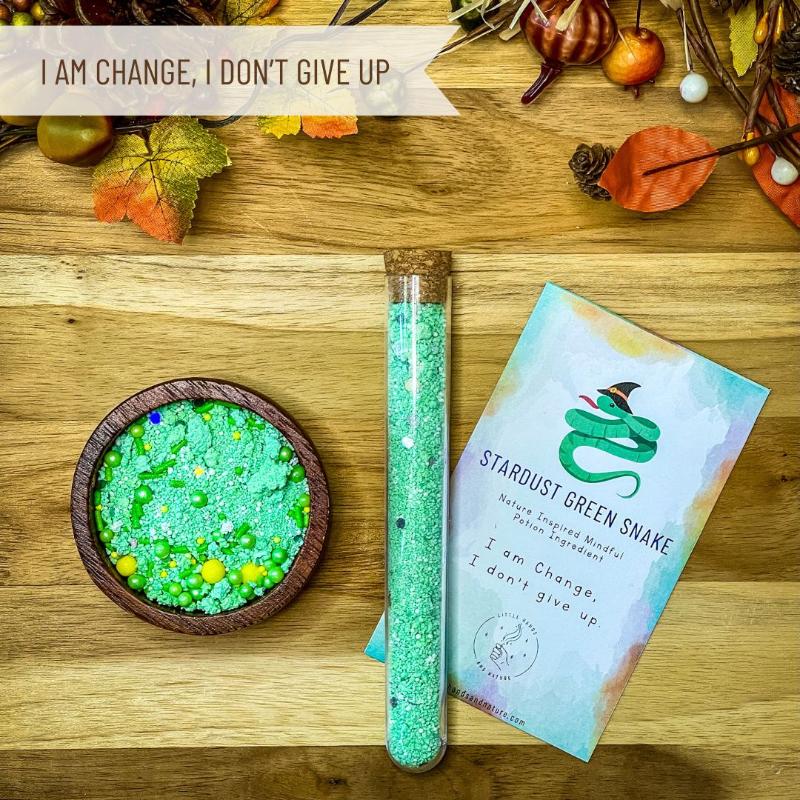
If you want a ready-made reason to begin, Little Hands and Nature offers non-toxic, handmade potion play kits that bring the scoops, fizz, tools, and little bits of wonder together in one box. Add a few fallen leaves or petals from outside, then let the child decide what the potion becomes. No finished picture is waiting at the end.
Bring Nature Play Close to Home
You do not need to travel to a trailhead for outdoor time to feel real. The front step, apartment walkway, shared courtyard, balcony, and driveway all offer a place to notice the season.
Make a small "what changed?" spot near home. It might be one tree you pass every morning, a crack in the sidewalk where clover grows, or a planter by the door. Visit it now and then. Is there a new leaf? Has the light shifted? Did last week's flower become a seed head? This kind of returning gives children a relationship with a place without turning it into a lesson.
A bucket of water can also bring a little more time outside. Wash pebbles with an old paintbrush. Pour water down a sloped tray. Make a shallow boat from bark and watch it drift across a basin. For younger children, stay close with any water play. The activity is simple, but the conversation that arrives around it often is not.
How to Keep It Easy Enough to Repeat
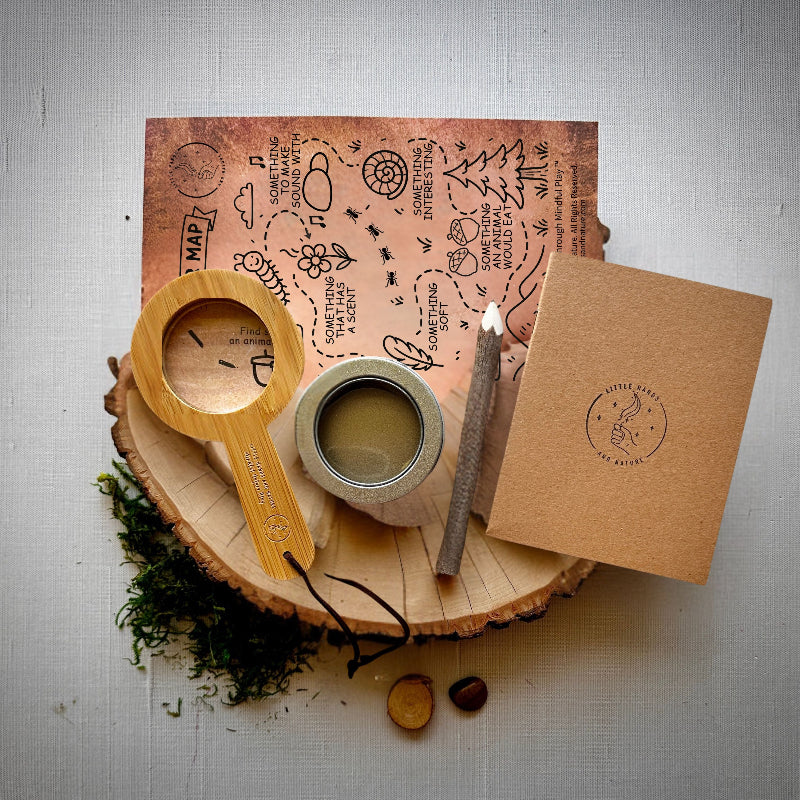
The best outdoor rituals are the ones that ask very little of you. Keep one small basket near the door with a magnifying glass, a few bowls, a spoon, and an old towel. It does not need to be beautiful. It just needs to be there when a spare twenty minutes appears.
Offer one invitation, then join in. Instead of setting up a whole activity, you might say, "I wonder which leaf feels the softest," and start looking. A child may follow your question, change it completely, or decide they would rather make a pile of rocks. All three are good places to begin.
There will be days when everyone stays inside. There will be days when the shoes do not make it on. Nature is not a task to complete. It is waiting in the branch outside the window, in the rain on the glass, in the pine needle carried home on a sleeve.
When you do step outside together, let it be small. Let it be imperfect. Bring a bowl if that helps, or bring nothing at all. The ordinary world is already full of things worth stopping for.