


A bowl of water. A spoon that feels good in a small hand. A few petals, fizzy colors, and a child deciding whether today’s potion is for mermaids, moon gardens, or a very sleepy dragon.
That is the heart of how to set up potion play. It does not need to be complicated or picture-perfect. The best setup is one that makes it easy to sit down together, pour a little, watch a little fizz, and let the story unfold without needing an answer.
Start with one clear, contained space
Potion play is happiest when it has a home for the moment. A kitchen table, a tray on the floor, a small outdoor table, or a patio step all work beautifully. Choose a spot where a few splashes will not change the mood of the afternoon.
Place a shallow tray, baking dish, or large bin in the center. This gives water, petals, and fizzy bits a place to land. It also makes the invitation feel real: everything is gathered, waiting, and ready for hands.
You do not need a large area. In fact, a smaller setup often feels cozier. One child can settle into their own little world, while two or three children can share a tray with enough bowls and scoops to go around.
If you are setting up indoors, lay down an old towel beneath the tray or choose an easy-to-wipe surface. Outside, bring the tray near the garden, where leaves and tiny flowers can join the scene naturally.
Gather simple potion play materials
A good potion station has a few things to pour, a few things to mix, and a few things that change before your eyes. Start with water in a small pitcher or bowl. Then add a handful of non-toxic, play-safe ingredients and tools.
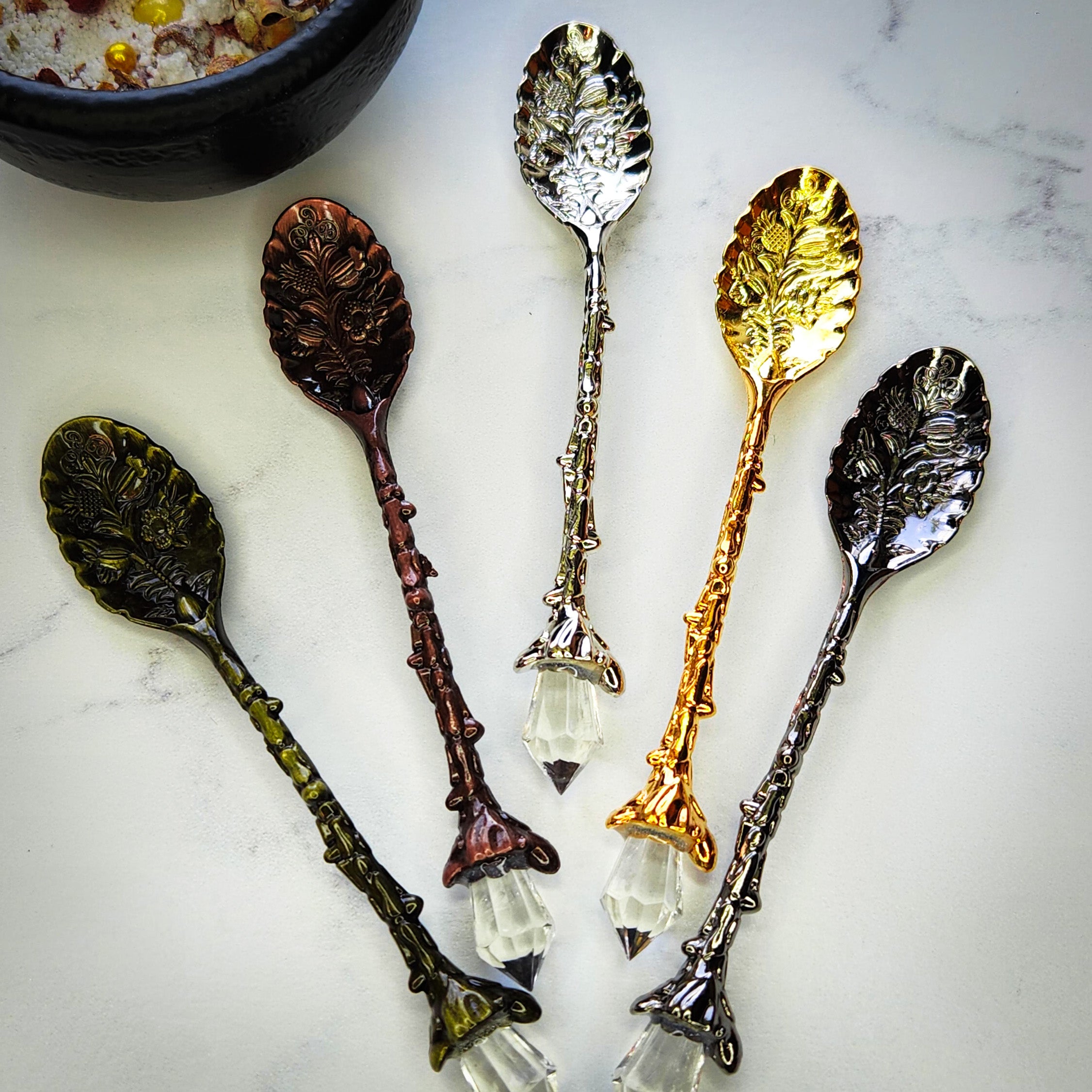
You might include dried flower petals, leaves, smooth pebbles, nature-inspired confetti, fizzy potion ingredients, colored liquid refills, small bowls, wooden scoops, crystal-style spoons, and a whisk or two. Children often love having little containers for collecting an ingredient they want to save for later in the story.
Keep the choices gentle rather than crowded. Four or five ingredients can feel more inviting than a table covered in everything you own. When there is room to notice each color and texture, the play tends to linger.
Choose materials made for children’s play and suited to their age. Potion play ingredients are for mixing and exploring, never for eating or drinking. Stay close while younger children play, especially when small pieces, water, or pouring tools are involved.
How to set up potion play without a long prep list
The easiest rhythm is simple: set out the tray, fill one small pitcher with water, arrange ingredients in little bowls, and add tools. Then sit down.
You do not need to explain every item or introduce a big theme. A quiet, open beginning is enough: “I wonder what this one will become.” Children usually know exactly where to take it from there.
If you would like a little more shape, choose one soft idea to place beside the tray. A few blue petals can become Mermaid’s Magic. Green leaves and pale fizz can become a forest potion. Pink and gold pieces might belong to a fairy crystal garden. The theme is only a doorway, not a set of rules.
For days when gathering supplies sounds like one more thing, a ready-to-open potion kit can hold the whole moment for you. Little Hands and Nature kits are handmade in the United States with non-toxic ingredients, nature-inspired pieces, and the tools needed to begin without a late-night search through drawers.
Let the child lead the story
Once the first scoop hits the water, resist the urge to name every next step. Potion play has its own kind of language: the clink of a spoon against a bowl, a cloud of color blooming through water, the delighted pause before a fizzy ingredient begins to bubble.
Your place is not at the edge of the table. You can make one too.
Try adding a petal to your own bowl and wondering aloud what it needs next. Ask small, curious questions when they fit: “Should this potion be sunny or stormy?” “Do you think it needs more sparkle?” “Where do you think this one lives?”
Then leave room for silence. Some children narrate every stir. Others concentrate with their whole face and do not say much at all. Both are welcome.
There is no finished picture waiting at the end. A potion can be purple water with a leaf in it. It can be a treasure soup, a flower cloud, or a bowl that gets emptied and filled again. The making is the point.
Make room for fizz and change
A little visible change gives potion play its special pull. If you are using fizzy ingredients, place them in a dry bowl or small jar until your child is ready. Let them add a pinch, spoonful, or whole scoop to water and watch what happens.
The waiting matters as much as the fizz. Children may lean close, listen for bubbles, stir slowly, or decide the potion needs another ingredient before it is complete. Give it a minute. There is no need to hurry it along.
Colored liquid can create another kind of wonder. Offer one or two colors in tiny bottles or cups, rather than a full rainbow at once. A few drops make a big change, and children can see how one color meets another in the water.
If the mixture becomes brown, cloudy, or very full, that is part of the experiment too. Set out a fresh bowl of water, pour the old potion into the tray, and begin again. Repetition is not a sign that the idea ran out. Often, it is where the play gets good.
Set up potion play for more than one child
For siblings, cousins, or a birthday table, use one large tray in the center or give each child a smaller bowl within the same shared space. A few extra wooden spoons and cups prevent everyone from waiting for the same tool.
Rather than making identical stations, make a shared ingredient bar. Put petals in one bowl, fizz in another, water in a central pitcher, and tools nearby. Each child can build a potion that looks entirely their own while still being part of the same little world.
For a party, it helps to keep water amounts modest and refill as needed. Place towels nearby and leave enough open space around the tray for elbows, sleeves, and excited pouring. The mood does not need to be tidy to be lovely.
A gentle ending that does not interrupt the play
There is no need to announce that potion play is over the second the table gets messy. Often, children reach their own stopping place after the last pour or final stir.
When it is time to wrap up, offer a simple choice: “Would you like to save this potion in its bowl for a little while, or pour it into the tray?” Let them carry a favorite spoon to the sink with you, or choose one dry petal to place back in the nature basket for another day.
Discard used ingredients, rinse the tools, wipe down the tray, and let everything dry before packing it away. Keep refill ingredients together in a small bin so the next invitation is easy to begin.
Some afternoons call for big plans. Others only have room for water, a spoon, and ten quiet minutes beside someone you love. That is enough for a little wonder to grow.
With gratitude,
The Little Hands and Nature team