


The kitchen is still carrying the day - backpacks by the door, a pan waiting in the sink, someone asking for a snack. This is often when parents wonder how to create family playtime that does not require a free afternoon, a detailed plan, or a burst of energy nobody has left.
It can be smaller than that.
A bowl on the floor. A few interesting things to pour. Ten quiet minutes while the light changes outside. Family playtime is not another item to complete. It is a small opening where everyone gets to be together without needing to arrive with the right answer.
Start with a moment that is already yours
The easiest family rituals attach themselves to something that already happens. Maybe it is the stretch between getting home and making dinner. Maybe it is Saturday morning before errands, or the slow hour after bath when the house begins to settle.
Choose a time that has a little breathing room, not a time that looks perfect on paper. For some families, that means fifteen minutes at the table before dinner. For others, it means spreading a towel on the porch while a younger child plays nearby. The best time is the one you can return to gently.
You do not need to promise that it will happen every day. Once a week can become something children look forward to. A few minutes can be enough. The point is not the length of time. It is the feeling of being invited to linger together.
Make family playtime easy to begin
The beginning matters. If play requires collecting supplies from three rooms, clearing a large space, and reading directions, it may stay a lovely idea instead of becoming part of the week.
Keep one simple play basket where you can reach it. Fill it with things that welcome open-ended making: a shallow tray, small bowls, wooden scoops, cups for pouring, smooth stones, leaves collected on a walk, and a towel for the inevitable splashes. What belongs in it depends on your home and your children, but fewer materials often leave more room for imagination.
A ready-to-open potion play kit can be especially helpful on full days. At Little Hands and Nature, our nature-inspired kits are handmade in the United States with non-toxic ingredients, so the ingredients, tools, and invitation are already gathered. A child can mix, pour, watch a fizz rise, and decide whether they are making rainwater for a garden, moon foam for a tiny creature, or a color-changing treasure pool.
That last part is worth protecting: let the story belong to them. There is no finished picture to match and no need to steer the play toward a certain result. You are not there to run the activity. You are there to wonder alongside them.
Set the space up for a real life mess
Play can be tactile without turning the whole house upside down. Choose a contained spot - a baking tray on the kitchen table, a plastic bin on the floor, or an old towel outdoors. Put water nearby if it fits your activity, then give yourselves permission to keep it simple.
Some days, that may mean dry scooping and arranging rather than anything wet. Some days, it may mean a full, fizzy potion scene. Both count. The right amount of mess is the amount you can comfortably leave behind when the moment is over.
Join the play without taking it over
Children often open up when an adult is close by but not directing every move. Sit beside them. Pick up a spoon. Make your own tiny potion. Ask a question that does not need a correct response: “What do you think this needs next?” or “What should we call that color?”
Then pause.
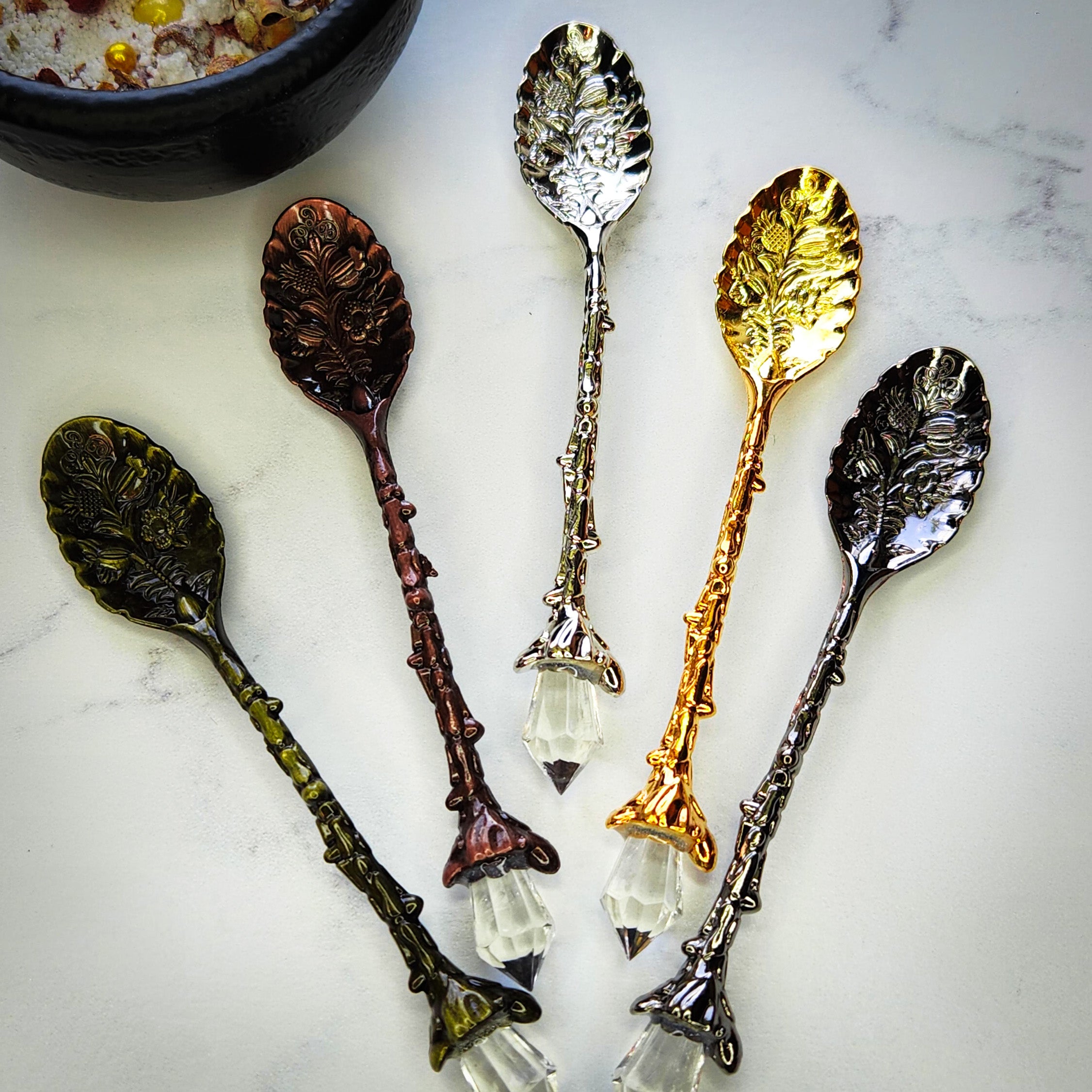
Sometimes they will hand you a role right away. You might be the keeper of the crystal spoon, the forest animal who needs help, or the customer at a very serious pretend potion shop. Other times, they may be busy with their own ideas and simply want your warm company nearby.
Both are connection.
Try not to rush to praise every scoop or solve every little problem. A simple “I see the bubbles are getting bigger” can keep the door open better than a big reaction. It tells them you are paying attention, and it leaves room for their next thought.
Let nature give you a starting point
Nature makes play feel different because it changes all the time. A bowl of fallen acorns in autumn, pale flower petals in spring, smooth river stones in summer, or a handful of pinecones in winter can become the beginning of a shared idea.
You do not need a big outdoor adventure. Notice what is already close: the shadow of a branch across the porch, rain on the window, a feather found near the sidewalk. Bring that small noticing into play. “This looks like a rainy-day potion.” “Should these pebbles live at the bottom of a pond?”
Seasonal play also gives family rituals a natural rhythm. You might make bright garden mixtures when the first green leaves appear, create a Mermaid’s Magic world on a warm afternoon, or build a snowy Fairy Crystal scene when the days turn quiet and cold. Repeating a loose theme each year can become part of your family’s memory without needing to be elaborate.
Have a few words ready for the hard-to-start days
There will be afternoons when nobody knows what to do first. That does not mean the moment has failed. A small invitation is enough.
Try setting out two bowls and saying, “I thought we could make something together.” Or pour a few ingredients into a tray and ask, “Should this be a forest, a beach, or somewhere nobody has named yet?” Children between three and ten may answer in very different ways, and that is part of the fun. One may want to make a dramatic volcano of bubbles. Another may carefully sort colors, line up tools, or invent a long story as they work.
If siblings are playing together, give each person a small area or a special tool at the start. They can join their creations later if they want to. Shared play does not have to mean everyone doing the same thing at the same pace.
Keep the ending soft, too
A good ending helps play feel possible next time. Instead of waiting until everyone is tired of it, notice a natural pause. “That potion looks complete.” “Let’s take one last look at what we made.”
You might snap a photo for your own memories, leave a creation on the windowsill for an hour, or simply pour the water out together and wipe the tray. Returning tools to the basket can be part of the ritual, not a punishment at the end of it.
And if cleanup feels like too much one day, choose a simpler activity next time. The family playtime that lasts is not the most beautiful one. It is the one that fits inside your actual life.
A little play can hold a lot
There is no need to turn every afternoon into an occasion. A child does not need a themed table, a perfect photo, or a parent with endless ideas. They may only need to see you sit down, place your hands near theirs, and stay for a while.
Start with what is easy to reach. Let the story be strange, sparkly, muddy, quiet, or full of fizz. Let it end before anyone is worn out.
The dishes can wait for ten minutes. The leaves will still be on the ground tomorrow. But this small invitation - this shared bowl, this made-up world, this moment of looking closely together - has a way of making a home feel softer.
With love, and room for a little wonder.